Solitaire Classic
- 4.7
- Rating
- 10.00K
- Installs
- Free
- Price
 Analysis by App-foxy
I installed Solitaire Classic expecting the familiar card game people open when they want something quiet to do, and that is exactly where it fits best. It is a free card game from SUN STUDIO, built around the traditional solitaire experience rather than a large collection of unrelated modes. The appeal is immediate: make a move, see whether the layout opens up, enjoy a small sense of progress, and start again when the deal reaches a dead end or the puzzle is complete.
That simple loop is more important than it sounds. Solitaire works because every decision is small enough to understand, but meaningful enough to keep your attention. You are not committing to a long match or learning a complicated ruleset. You can play while waiting for an appointment, during a short break, or at home when you want a low-pressure way to occupy your hands. My overall impression is that this version is best judged as a focused, accessible take on a classic rather than as a feature-heavy card platform.
How the first move sets up the whole session
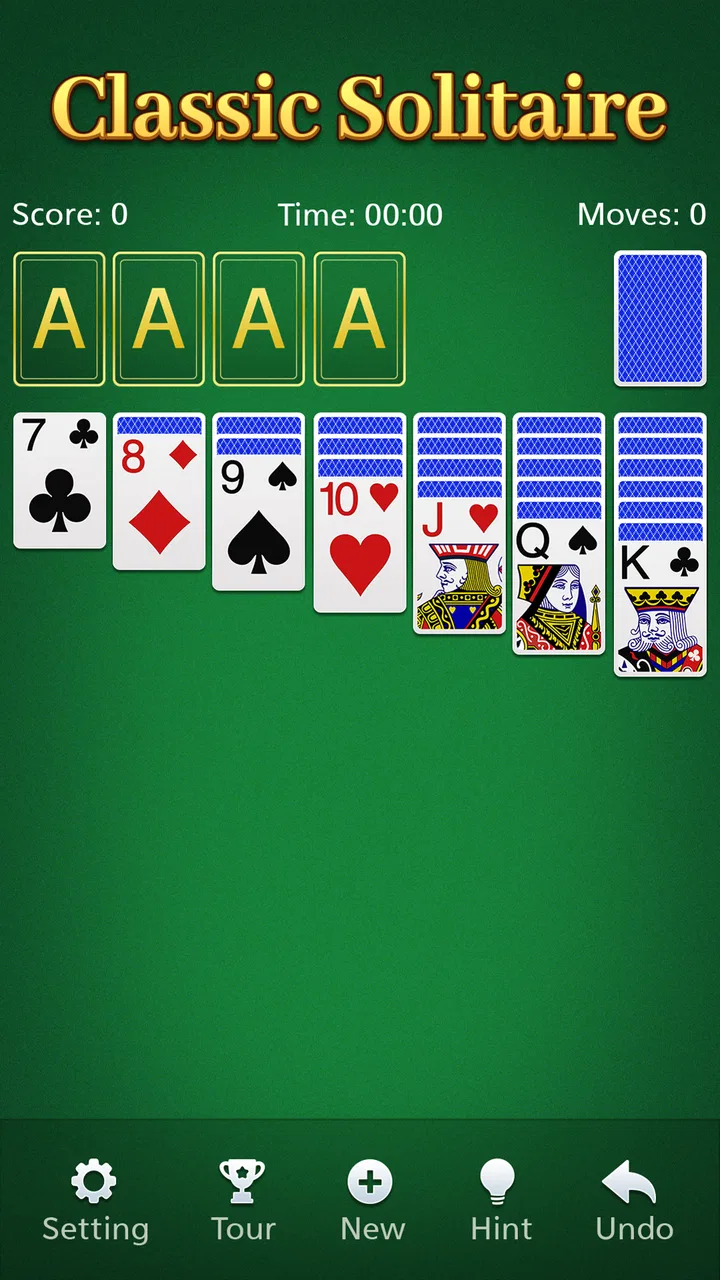
The first action in a solitaire game is usually straightforward: I look across the tableau, identify cards that can move, and decide which move gives me the most useful information. That opening scan is where the game quietly asks for judgment. Moving an exposed card may reveal a hidden card, but it can also remove a useful space or block a sequence that I may need later. The rules are familiar, yet the order of actions still matters.
You May Also Like

 AccuWeather: Weather Radar
AccuWeather Review: A Quick, Clear Forecast for Everyday Decisions
For everyday plans, the best forecast is the one you can understand quickly. AccuWeather makes rain timing, radar, and local conditions easy to act on, with a few trade-offs.

 Hill Climb Racing
Why Hill Climb Racing Still Turns Crashes Into One More Run
A tiny car, a bumpy hill and one more upgrade: Hill Climb Racing keeps resurfacing because its simple chaos makes every near-miss feel personal.

 AliExpress - Shopping App
AliExpress Makes Global Shopping Feel Personal, but Shoppers Bear the Risk
AliExpress turns a global marketplace into a pocket-sized discovery engine. Its reach is useful, its shopping loop compelling, and its trade-offs easy to miss.

 Lords Mobile: Kingdom Wars
Lords Mobile Is a Kingdom-Building Routine, Not a Quick Match
A case-by-case verdict on the building, battles, device demands, and social commitments that make Lords Mobile rewarding for some players and exhausting for others.

 PDF Scanner app - TapScanner
TapScanner Makes Paperwork Easier to Capture, Check, and Share
TapScanner makes scanning with a phone feel less like a rescue operation and more like a dependable step in getting work done. Its capture tools are useful, though not flawless.

 Block Blast!
 Shows How Much a Puzzle Game Can Leave Out
A quiet grid game shows why puzzle players increasingly value instant clarity, repeatable skill and low-pressure play—and where the genre still needs to catch up.
More From Our News Desk
View All News


That makes the opening more engaging than simply tapping every legal move. I try to prioritize moves that uncover hidden cards or create room for a useful sequence. When two choices appear equally safe, I tend to choose the one that gives me more information about the layout. This is a practical habit for new players because it reduces random play and makes each deal feel like a small problem to solve.
The game is suitable for people who already know classic solitaire, but it also works for someone returning to the format after a long break. The basic card logic is easy to recognize, so there is little friction before the first meaningful decision. The Everyone content rating also makes it a comfortable choice for a broad audience, especially when the goal is a calm, familiar pastime rather than a competitive or story-driven game.
One useful way to approach a new deal is to resist the urge to move cards immediately from the stock or waste area. I first check the visible tableau for moves that expose a covered card. This is not a guaranteed winning strategy, but it often produces more useful information than spending stock cards without a plan. In a game this compact, that small change in order can make the difference between feeling in control and simply reacting to whatever appears next.
The quiet satisfaction of revealing information
The strongest early feedback comes when a move exposes a previously hidden card. The reward is not a flashy event; it is the new possibility created by that reveal. A card that was unavailable a moment ago may open a sequence, create a needed color alternation, or show that the current route is less promising than expected. I like this because the game gives me a reason to keep examining the layout instead of treating every move as an isolated tap.
There is also a useful distinction between a move that looks productive and one that truly improves the position. Placing a card into an empty space can feel like progress, but the space is valuable only if the card sequence supports future movement. Similarly, sending a card toward a foundation pile may be correct, yet holding it temporarily can sometimes preserve flexibility. These small trade-offs give the classic format its lasting appeal, and they are where the game feels more thoughtful than its relaxed presentation suggests.
For a short session, I usually focus on keeping options open rather than trying to calculate the entire deal. I look for moves that uncover cards, preserve empty spaces, and avoid burying a card that may be needed to complete another sequence. This approach is especially helpful on a phone, where the screen is smaller and I want decisions to remain readable rather than turning the game into a long mental exercise.
The feedback rhythm: move, inspect, and choose again
Solitaire Classic’s core rhythm is built from very small changes. I make a move, inspect what became available, and then choose whether to continue developing the tableau or work through the stock. The feedback is immediate in the sense that every action changes the visible arrangement. That makes the game easy to pick up for a few minutes, because I do not need a long tutorial or a complicated objective before the next decision becomes clear.
The rhythm also explains why solitaire can be relaxing without becoming completely passive. The game does not demand constant speed, but it does reward attention. I can pause between moves, reconsider an earlier choice, and continue when I am ready. For someone who finds fast card games tiring, this slower pace is a genuine advantage. For someone who wants animation, competition, or constant challenge, the same restraint may feel too modest.
A practical tip is to treat the stock as a source of timing rather than a button to press whenever the tableau seems quiet. Before drawing again, I check whether a visible move can expose a card or rearrange a sequence. This keeps the stock from becoming a substitute for planning. It also makes the later part of a deal easier to read because I have not used every available option without considering the consequences.
Another useful habit is to watch the cards that are likely to become bottlenecks. If a low card is buried under several layers, I avoid making moves that reduce the number of ways to reach it. Likewise, when a card can be placed in more than one location, I consider which placement leaves the most future choices. These are not special features of the app; they are ways to get more value from the particular decision structure that this classic card format provides.
Why the game can feel rewarding without adding noise
The reward in a good solitaire session comes in layers. A small reward is revealing a hidden card. A larger one is opening an empty space or completing a useful sequence. The clearest reward is finishing the deal. Because these steps are connected, even an unfinished game can feel worthwhile if it improved my understanding of the layout or led to a better decision than the previous attempt.
I appreciate that the experience does not need a dramatic narrative to make progress feel meaningful. The cards themselves provide the feedback. A successful move changes the shape of the puzzle, and that visual change tells me what to examine next. This is why the game works well as a mental reset: it occupies enough attention to interrupt idle scrolling, but it does not require the emotional investment of a competitive match.
At the same time, the reward is naturally limited by the format. Players who need unlockable collections, characters, missions, or a strong sense of long-term progression may find the experience thin. The free entry point is convenient, but the presence of in-app purchases priced at $9.49 per item means anyone who wants to keep spending tightly controlled should check the purchase flow carefully before playing regularly. For me, the basic card loop is the reason to use it, not the promise of a broader progression system.
The developer, SUN STUDIO, has positioned the game for a wide audience, and its store presence reflects that approachable goal. It has a 4.7 average from around 72 ratings and has passed 10 thousand installs, which suggests that the straightforward presentation is connecting with a modest but interested player base. I would not use those figures as proof that it is the best solitaire option for everyone, but they do fit my experience of a game that is easy to understand and pleasant in short bursts.
When a session resets and why I start another deal
A solitaire session usually ends in one of two satisfying ways: I complete the layout, or I reach a position where the remaining options no longer lead anywhere useful. The reset is part of the appeal rather than a failure of the design. Once I know the current route is finished, starting another deal gives me a clean puzzle with no need to remember a story, maintain a team, or wait for another player.
I find the reset especially useful during small gaps in the day. If I have only a few minutes, I can begin a deal and stop without losing the larger purpose of the game. If I have more time, a completed or blocked layout naturally invites another attempt. That “one more deal” feeling comes from the chance that a fresh arrangement will offer a better sequence of decisions, not from a complicated reward schedule.
There is a trade-off here. A reset is refreshing when I want a self-contained puzzle, but it can feel repetitive if I am looking for variety beyond changing card arrangements. Compared with a multiplayer card game, this one avoids pressure and waiting, yet it also lacks the unpredictable human decisions that make online matches exciting. Compared with a solitaire collection containing several rule sets, it is easier to approach but less suitable for someone who wants to switch between Klondike-style play, Spider, FreeCell, and other formats.
I would also choose a different kind of app if my main goal were structured brain training. The game encourages planning and attention, but it is still a leisure card game first. Its value comes from the balance between familiar rules and small decisions, not from a formal learning program or a measured training plan. That distinction matters when deciding whether it belongs in your daily routine.
Who will get the most from this version
This is a good fit for a player who wants a free, traditional card game that can be opened quickly and played without social obligations. It suits people who enjoy arranging cards, thinking one or two moves ahead, and repeating a compact puzzle until the next deal feels appealing. It is also a sensible option for a family device because the age rating is Everyone and the basic concept is familiar across generations.
I would recommend it to someone who has a daily waiting period and wants a more focused alternative to browsing. For example, during a short commute break or while waiting for a friend, I can play a few moves, stop at a natural point, and return later without needing to reconstruct a complicated game state in my head. The low-pressure pace makes it particularly comfortable for those moments when I want engagement without urgency.
On the other hand, I would skip it if I wanted competitive leaderboards, social interaction, a rich visual theme, or a large set of distinct card games in one download. I would also be cautious if I dislike in-app purchase prompts in free games, since the paid items are part of the product’s commercial setup. The game is most convincing when treated as a focused solitaire table, not as an all-purpose entertainment hub.
Practical details before installing
The game is free to download, which makes it easy to test without committing money at the start. It runs on devices using Android 8.0 or later, and the current version is 1.1.4. Those details matter for anyone using an older phone or tablet: checking the operating system before installation can save time, especially if the device is kept for simple games and everyday tasks.
Because the game is built around a familiar card format, I do not need to spend much time learning controls before deciding whether it suits me. The more important question is whether I enjoy this particular kind of repetition. The first few deals are enough to reveal that. If I like the cycle of scanning, moving, uncovering, and resetting, the simplicity becomes a strength. If I need constant novelty, the same simplicity will become its main limitation.
I also recommend setting a personal spending boundary before making any purchase inside a free game. The listed price of $9.49 per item is easy to overlook when the initial download costs nothing. Even though the central appeal is the card play itself, it is sensible to treat optional purchases as a separate decision rather than assuming they are necessary for the basic experience.
My verdict on the complete loop
My experience with Solitaire Classic comes down to a clean sequence: I inspect the layout, make a careful move, receive immediate visual feedback, uncover a new possibility, and decide whether the position deserves another step. When the deal is complete or no longer promising, the reset is quick and understandable. That loop is the game’s real strength, because every stage supports the next without demanding more attention than the moment allows.
The game is not trying to replace a full card-game collection or a competitive online platform. Its best use is narrower and more honest: a familiar solitaire session for quiet concentration, short breaks, and repeatable puzzles. I like it most when I want something playable in small portions and mentally active without becoming stressful.
For Android users on version 8.0 or later who enjoy classic solitaire and are comfortable with a free game that includes $9.49 in-app items, it is worth trying. The 4.7 average from around 72 ratings and its growing install base support the impression that it has found an audience, but my recommendation rests mainly on the feel of the loop. Choose it for the calm decision-making, the quick reset, and the satisfaction of turning a messy layout into a finished one.
FAQs for Solitaire Classic
01What features does Solitaire Classic offer?
Solitaire Classic offers a timeless card game experience with traditional Klondike gameplay. Features include customizable card decks and backgrounds, daily challenges, and unlimited hints. The app also provides statistics tracking to monitor your performance, with a user-friendly interface optimized for both phones and tablets.
02Is Solitaire Classic free to play?
Yes, Solitaire Classic is free to download and play. However, it may contain in-app purchases and ads. These can enhance the gaming experience or remove ads entirely, but the core gameplay remains accessible without spending any money.
03Does Solitaire Classic require an internet connection?
No, Solitaire Classic does not require an internet connection to play. You can enjoy the game fully offline, making it a great option for those who want to play while traveling or in areas with limited connectivity.
04Are there any accessibility features in Solitaire Classic?
Solitaire Classic includes several accessibility features such as adjustable text size and color contrast options. These features help ensure that players with visual impairments can enjoy the game comfortably. The app's simple controls also make it accessible for players with different skill levels.
05How is the app's performance on older devices?
Solitaire Classic is optimized for performance on a wide range of devices, including older models. The app's lightweight design ensures smooth gameplay without significant battery drain or lag, making it a reliable choice for users with less powerful smartphones or tablets.
Pros
- Intuitive interface for easy navigation.
- Customizable card decks and backgrounds.
- Offline play available
- no internet needed.
- Minimal ads for an uninterrupted experience.
- Smooth performance across all devices.
Cons
- Limited game modes beyond classic solitaire.
- Occasional in-app purchase prompts.
- No multiplayer or social features.
- Lacks daily challenges or events.
- Ads can be repetitive when present.

Solitaire Classic
Gallery